A garage door can weigh anywhere from approximately 130 extra pounds for a little protected steel door to well over 300 extra pounds for a large wood or industrial setting up. That weight is manageable only because the spring garage door maintenance Southport system does the real training. When a springtime breaks, loses stress, or is adjusted inaccurately, the door stops behaving like a well balanced machine and starts imitating a blunt pressure hazard.
Property proprietors usually observe the trouble when the door unexpectedly really feels hefty, the garage door opener pressures, or the door climbs a few inches and pounds closed. At that point, lots of people start searching for garage door repair suggestions and ask yourself whether spring job is a reasonable do it on your own task. After years around domestic garage door repair and industrial garage door repair calls, my view is straightforward: springtime replacement is worthy of a high level of caution, and for a lot of owners it belongs in specialist hands.
That does not imply property owners need to remain ignorant. The safest clients I deal with are the ones who recognize what the springtimes do, identify the warning signs early, protect the location properly, and know when to quit. Good judgment protects against injuries, shields the door system, and commonly maintains a tiny repair service from developing into a complete garage door installation.
Why springtime replacement is different from various other garage door work
Many garage door jobs are fairly low danger. Replacing remote batteries, cleaning up photo eyes, lubing rollers, or resetting a garage door opener after a power outage generally falls under the regular upkeep group. Spring substitute is not routine maintenance.
A torsion spring or extension springtime shops a substantial quantity of mechanical energy. That energy is what counterbalances the door. If it is launched in a controlled fashion, the door works efficiently. If it is released all of a sudden as a result of a slipped winding bar, a failed bracket, a negative collection screw, or an improvised device, components can relocate with enough pressure to break fingers, lacerate hands, damage automobiles, and in severe cases create life altering injuries.
The risk is not restricted to the spring itself. When the counterbalance is gone, the door comes to be unsteady. A disconnected opener cart, a frayed wire, or a slanted bottom area can create a domino effect. I have actually seen a property owner remove a spring just to find the door was no more sustained evenly, triggering one side to drop and twist the entire setting up. What started as a spring issue developed into curved tracks, harmed panels, and a substitute estimate far higher than the initial repair.
Know which sort of spring system you have
Most homeowner have either systems: torsion springtimes installed on a shaft over the door opening, or expansion springtimes that stretch along the straight tracks. Torsion systems prevail on newer doors and generally supply smoother operation and longer cycle life. Expansion systems are still found on lots of older homes and light responsibility applications.
The safety factors to consider vary. Torsion springs carry torque around a shaft and are wound under tension making use of specific bars. Extension springs stretch and agreement, and they should constantly have control cords running through them. If an expansion springtime breaks without a safety and security cable television, it can whip throughout the garage like a metal slingshot.
For larger buildings, rolling steel and sectional overhead doors in industrial settings usually utilize larger torsion assemblies, several springtimes, jackshaft drivers, and specialty hardware. Commercial garage door repair can entail higher cycle springs, bigger drums, and doors that are simply not forgiving when messed up. A stockroom proprietor who fits altering a hinge on a shed door ought to not assume the same self-confidence applies to a full size filling bay door.
The warning signs that deserve instant attention
Springs seldom stop working without leaving clues. Some clues are noticeable, others are subtle sufficient that proprietors disregard them until the day the door will not open.
Here are 5 signs that ought to move the problem to the top of your maintenance list:
The garage door feels abnormally heavy when raised manually. The opener battles, jerks, or quits before the door reaches full height. You listen to a loud breeze from the garage, typically referred to as a gunfire or firecracker. The door increases erratically, or one side appears to drag the other. There is a visible space in a torsion spring, or an expansion springtime looks stretched out and tired.That loud breeze matters. Greater than when, a client has informed me they heard a bang in the garage at night and thought a shelf had actually dropped. The next early morning the door would closed. In many cases, that sound was a torsion spring damaging cleanly in two. The visible gap is the giveaway.
The first security step is not touching the spring
When a spring has stopped working or is presumed to be stopping working, the smartest very first action is to quit making use of the door up until you recognize the circumstance. That indicates no repeated opener cycles to "see if it removes itself." A struggling opener can wear out the electric motor, strip equipments, or bend the leading area of the door. I have actually changed greater than one garage door opener that died because it was forced to do a spring's job.
If the door is shut, leave it closed if possible. A shut door is usually one of the most secure placement. If the door is stuck open, securing the opening ends up being the top priority. Maintain individuals away, particularly youngsters, and do not stroll beneath the door while explore controls. If a spring, wire, or drum has stopped working, the door may not remain up.
Disconnect power to the opener if there is a danger someone else may trigger it. In shared buildings, that step is usually ignored. I have actually seen lessees hit a wall surface switch while an owner was inspecting the springtime, creating an extremely harmful surprise.
Personal safety devices aids, however it does not remove the risk
Gloves, eye protection, and durable shoes are reasonable around garage doors. Safety glasses protect versus corrosion flakes, metal burrs, and debris from frayed wires. Gloves can minimize cuts from sharp track sides and cord hairs. Excellent shoes matter if a device or brace drops.
Still, protective devices must not produce false self-confidence. Handwear covers do not quit a winding bar from slipping. Safety glasses do deficient secure to loosen an established screw on a crammed torsion cone without proper positioning and tools. The best security equipment in springtime work is managed technique, right hardware, and the judgment to require professional garage door repair when the task exceeds your experience.
Why improvisated devices are a serious mistake
One of the a lot more troubling patterns in spring crashes is using whatever happens to be neighboring: screwdrivers as opposed to winding bars, locking pliers on used equipment, mismatched outlets, or a ladder that rocks on an irregular slab. Improvisation around kept springtime power is a bad bargain.
Proper torsion work typically calls for strong steel winding bars of the correct size and length, plus clamps, appropriately sized wrenches, a secure ladder, and adequate area to work without twisting your body into awkward positions. Despite the right devices, the worker needs to understand the number of transforms a springtime ought to bring, how to determine left wind and best wind springtimes, and just how to secure the shaft and tracks before making adjustments.
The same reasoning applies to extension systems. If the pulley-blocks are worn, the wires are torn, or the safety and security cable television is missing, replacing only the springtime might not bring back risk-free procedure. This is one factor experienced technicians examine the full counterbalance assembly rather than switching one part and leaving old failing points in place.
The covert threat of the "just one busted springtime" mindset
On a two spring torsion system, owners often observe just one broken spring and presume replacing that solitary springtime suffices. Sometimes it works in the short term. Frequently it creates another problem.
Springs wear by cycles. If one springtime has reached the end of its life span, the companion spring has actually normally seen the very same number of cycles. Setting up one new spring close to one fatigued springtime can leave the door unevenly balanced. The opener may compensate for a while, but the older springtime frequently stops working right after. That suggests one more service phone call, an additional period of downtime, and extra wear on cords, drums, and the opener.
A balanced door need to lift efficiently and stay near mid traveling when disconnected from the opener. Attaining that equilibrium becomes part of safe Garage door spring replacement. It is not just concerning obtaining the door to open up. It is about recovering the system so the opener overviews the door rather than dragging dead weight.
Property owner activities that are typically safe
There is a beneficial middle ground in between doing nothing and trying the complete fixing yourself. Proprietors can take numerous steps that improve safety and security and provide a technician far better details when they arrive.
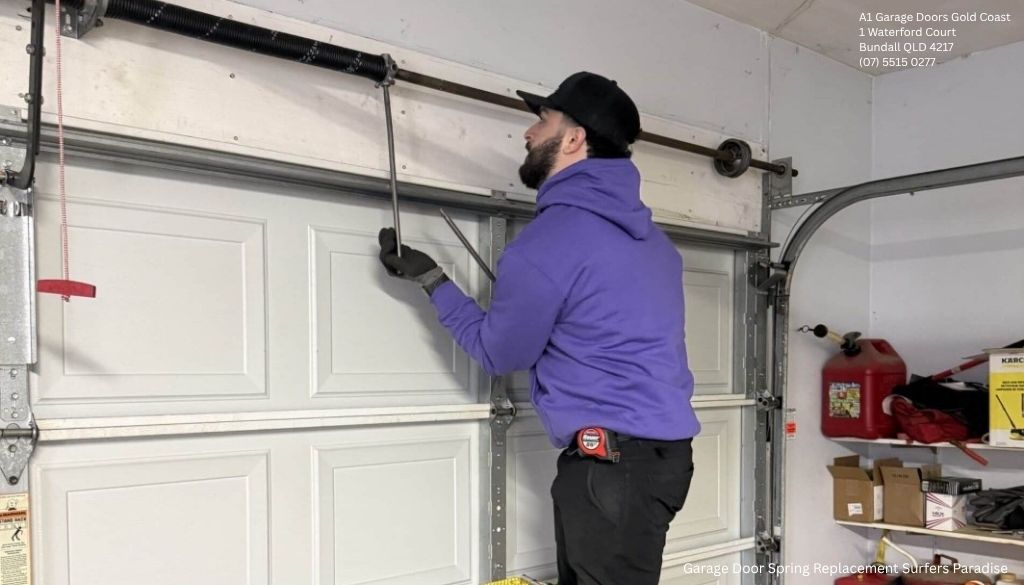
- Keep the door out of service and avoid any person from making use of the opener. Look from a range for a springtime void, loosened cable television, curved track, or hanging pulley. Take clear images of both springtime ends, the center brace, cords, and opener arm. Move vehicles out just if you can do so without operating an unstable door. Write down the door size, material, and any kind of labels on the springtime or opener.
That photo routine saves time. A technology can frequently tell from a couple of excellent pictures whether the door makes use of torsion or expansion springtimes, whether the cables are endangered, and whether the opener bracket has actually begun to tear from the top area. It also aids recognize when a previous garage door setup used nonstandard hardware.
When a door must be opened up before solution arrives
This is one of the trickiest circumstances for homeowner. An automobile is entraped within, the springtime has stopped working, and the lure is to force the door up. In some cases a door can be raised manually by 2 solid grownups if the opener is disengaged and the course is clear. Sometimes that is an awful idea.
The risk relies on the door weight, whether one or both springtimes have fallen short, whether the cords are still seated on the drums, and whether the door sections are in good condition. If a cord has leapt a drum or an extension spring has broken erratically, lifting the door can trigger it to rack in the tracks and jam hard. If you are under the door when that happens, your margin for mistake disappears.
If opening the door is inescapable, move gradually, use sufficient help, maintain hands far from pinch factors, and secure the door in the open position with correct clamps on the tracks once it is elevated. Never ever depend on the opener or your very own grip alone to hold it. Even after that, this is a last option, not conventional technique. Oftentimes it is safer and more affordable to wait on service than to risk a fall or produce track damage.
Special issues in leasing, multi system, and business properties
Owners of rental homes and commercial structures have a broader obligation. It is not only your own security at stake. Lessees, staff members, vendors, and delivery chauffeurs might use the door without recognizing the warning signs.
For a single household rental, a door that really feels hefty or slams shut ought to be dealt with the same way as a defective stair rail or busted lock, as a condition requiring punctual interest. A lessee may keep operating the door out of ease, especially if they rely upon automated gain access to. That increases the opportunity of opener failure or injury.
Commercial garage door repair calls often involve tighter routines and even more web traffic around the opening. A solution bay or storage space facility may require immediate accessibility, yet speed should not bypass lockout and area control. Forklifts, pedestrians, and vehicles create a lot of moving components for informal troubleshooting. If a business spring breaks, separate the door, tag it out of service, and bring in a qualified specialist with the ideal training equipment and substitute stock.
The connection in between springs and the garage door opener
A common misunderstanding is that the opener raises the complete weight of the door. It does not, a minimum of not when the system is healthy and balanced. The springtime counterbalances the door, and the opener handles regulated movement. When springtimes are used or broken, the opener becomes a resistant substitute.
That is why a harmed spring frequently shows up first as an opener issue. The wall switch works intermittently. The motor hums. The carriage travels, however the door barely moves. House owners then assume they require a brand-new garage door opener, when the actual problem is the counterbalance system.
There are situations where both hold true. An opener that has been hauling an unbalanced door for months might have stripped inner gears, overheated, or curved the rail connection at the top section. Throughout property garage door repair, a good technician checks the opener after springtime replacement to ensure it is still running within typical force settings and travel restrictions. Replacing the spring without altering the opener can leave the system unreliable.
How experts approach springtime substitute safely
Professional spring job is not secure since service technicians are fearless. It is much safer because the process is disciplined. The door is recognized correctly, the springtime dimension is matched to the door weight and height, the equipment is inspected as a system, and the workspace is controlled.
An experienced professional will usually verify the door balance, inspect the shaft, drums, facility bearing, end bearing plates, hinges, rollers, and cable televisions, after that install springtimes with the correct wind and torque. Afterward, the door is examined by hand before the opener is reconnected. If the door does not hold near mid travel or drifts noticeably, the equilibrium is dealt with prior to the work is considered complete.
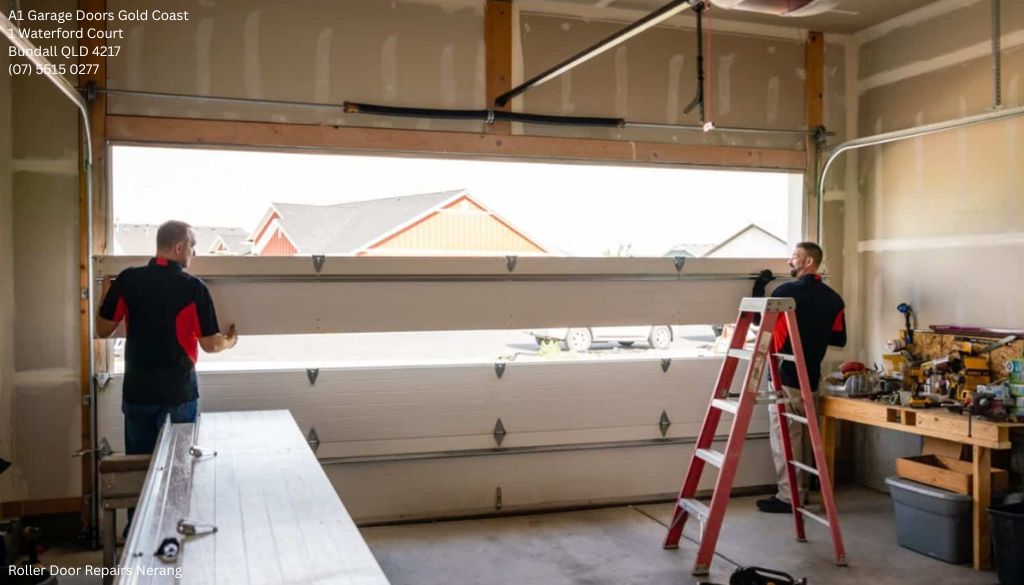
That procedure issues due to the fact that the incorrect spring can produce a false feeling of success. An also strong spring can make the door shoot upward and strain the opener on the way down. A too weak spring leaves the opener doing excessive work and can reduce its life. Proper Garage door spring substitute is as much regarding calibration as it has to do with switching parts.
A few judgment calls that save money and trouble
Not every old door should have significant springtime work. Occasionally the best choice is a more comprehensive reset. If the bottom panel is decayed, the track is curved, the sections are fracturing around the hinges, and the opener is nearing the end of its life, putting money right into bit-by-bit repair may not be sensible. In that instance, a complete garage door installment can supply much better worth, quieter procedure, boosted insulation, and updated safety and security features.
On the various other hand, several doors with a broken springtime are otherwise healthy and only need quality springtimes, fresh wires, and a tune up. I have seen twenty year old sectional doors return to smooth service due to the fact that the owner addressed the issue early as opposed to running the opener up until everything else failed.
The key is assessing the entire system, not obsessing on the loudest symptom.
Questions to ask before employing a repair service company
A trustworthy firm ought to be comfortable discussing spring kind, cycle score, service warranty terms, and whether both springtimes must be replaced on a two spring system. They must likewise clarify if extra parts are put on and why those components matter.
Ask whether the service technician will certainly balance the door manually after installment. Ask whether the quote includes labor, disposal of old springs, and opener modification if needed. If the door is commercial, ask whether the technology has experience with that said details door style and driver configuration.
Price matters, however springtime work is not a product. Extremely low prices in some cases suggests slim cycle springs, reused equipment, or hurried change. A slightly higher invoice for proper sizing and cautious configuration is often less costly over the life of the door.
The profits for owners
Garage doors recognize, that makes them simple to ignore. The spring system hides its danger in plain sight. That is why so many injuries take place throughout moments of confidence instead of moments of panic. An individual sees a metal coil, a few braces, and a cable television, and assumes patience suffices. Frequently it is not.
The best method begins with acknowledgment. If the door is heavy, noisy, jagged, or opener reliant, quit treating it as an ease item and begin treating it as tools under load. Protect the location, stay clear of improvised repair services, and obtain a trained collection of eyes on the full system.
For proprietors that manage homes, rental units, shops, or storehouses, this is not just a fixing problem. It belongs to accountable residential property care. Done appropriately, Garage door spring substitute restores secure procedure, protects the garage door opener, and avoids preventable damage to the door itself. Done thoughtlessly, it can turn a workable service call right into an emergency.
A well balanced garage door should move with shocking ease. If yours does not, pay attention to what it is telling you.